Children’s Burns Trust is issuing an urgent call to parents and carers following alarming new data from the International Burn Injury Database (iBID), which reveals a 16.4% rise in the number of children with severe hot drink burns between 2022 and 2024. These are not minor injuries, every child included in these numbers required admission to a Specialist Burns Service because their burns were too serious to be treated in A&E or general hospitals. One Spill Can Change a Child’s Life.
Hot drinks remain the leading cause of burns to children in the UK, and due to their small size, a single spill can cover a large portion of a child’s body, often resulting in life-changing injuries and long-term psychological trauma.
Despite this, these accidents are entirely preventable by keeping hot drinks out of reach.
An updated public facing iBID PBI site has been launched to better identify cases of preventable injuries. This page is being embedded in prevention charity websites.
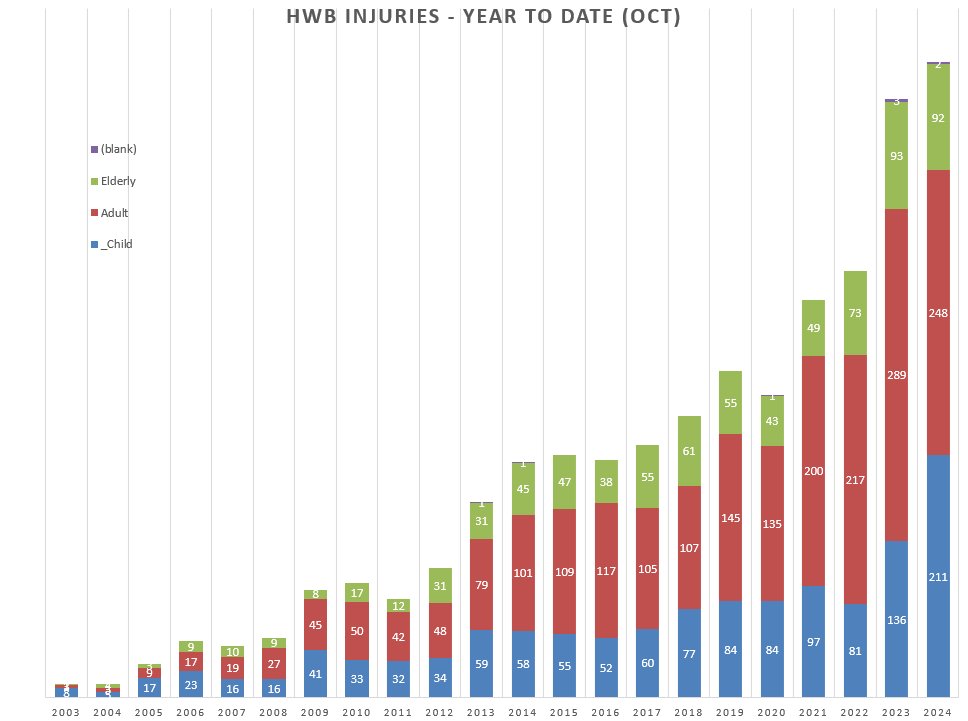
The Children’s Burns Trust issued an urgent appeal to parents and carers following a worrying 55% increase in hot water bottle (HWB) burns to children. New data from the International Burn Injury Database (iBID), shows that burn and scalds to children in the first eight months of 2024 increased by 55% compared with the same period in 2023. This come on top of the concerning increase reported prior to the NBAD of 2023. This issue was taken up by BBC Breakfast who reported on the fact that HWB scalds to children in the first eight months of 2024 increased by 121% compared with the same period in 2021.
Advice was provided on how to check how old a HWB is by inspecting the flower symbol on the bottle, which shows the date of manufacture to determine when it should be replaced.
Further to media interviews: https://www.bbc.co.uk/news/articles/c4gdvwrdjrvo and https://www.bbc.co.uk/programmes/p0jy2bg9 an investigation by iBID staff of the British Standards Institute (BSI) web site revealed that the BS 1970:2012 regarding hot water bottles manufactured from rubber and PVC was withdrawn on 4/3/24 and the responsible technical committee, PRI/68 was disbanded 18/07/22. Given the growing number of injuries from hot water bottles a query was logged on 16/10/2024 with the BSI expressing concern at the withdrawal of the standard and asked when a replacement standard is to be published? No reply has been received.
This information will be shared will involved charities and follow up questions asked of the BSI.
As demonstrated during the BCIG Forum presentations to burn services earlier this year, the MS Power Business Intelligence (P-BI) presentation of the iBID data has been launched. Considerable care in ensuring that the data is fully anonymised and secure in accordance with NHS guidance, including small number suppression. This reporting enhancement builds on the iBID Information Service, which has been available online to over 200 burn service personnel since 2017. Specific data extracts and reports based on individual requests will continue to be available. With over 300 completed requests to date, many of which have led on to presentations and publications, this remains an important and valuable resource for the burn care community.
Services are still able to download their own raw data from within their version of the iBID (Aquila) software, but this development shows all of the analysed metrics that make up the Quality Dashboard (QD), which in this release includes the complete 2023/24 data. Although there are still a few issues to work through regarding some of the QD metrics, the direction of travel is now plain to see, and suitable for inspection and comment. You will note that the telereferral data is also presented for those services using the system, with the data extraction being matched with the iBID data. New insights from the combined datasets are planned.
The intention is to develop further pages as indicated on the site as ‘Coming Soon’. These are being worked on, but feedback on the existing presentation is invited, including suggestions of which further forms of analysis would be of benefit. We plan to make the data as near real-time as possible, rather than relying on periodic extracts, but this will take several further steps before being realised.
Cost of living crisis: Burns to children from hot water bottles have increased by 45%
Brand new insight released today on National Burn Awareness Day 2023 shows an alarming increase in the number of life-altering burn and scald injuries to babies and children involving hot water bottles. New data from the International Burn Injury Database (iBID), shows that burn and scalds to children in the first six months of 2023 increased by 45% compared with the same period in 2022. Burns and scalds to adults and the elderly from hot water bottles have also increased by 19%.
Children’s Burns Trust and British Burn Association, have released this exclusive insight to raise awareness of the risks posed by hot water bottles and the devastating nature of burns and scalds, which can lead to life-altering injuries. The ongoing cost of living crisis, and the financial pressures that households have been under for some time – coupled with universal credit deductions – has led to a change in behaviour where parents are looking for ways to keep their children and families warm without increasing their energy bills, such as through the use of hot water bottles.
Ken Dunn, Consultant Burns and Plastic Surgeon (retired) and Vice Chair of The Children’s Burns Trust, whose work is focused on children and their families said: “The significant increase we have seen of injuries from hot water bottles to children is alarming and as the colder months of the year approach – coupled with the ongoing cost of living – we’re urging families to avoid using hot water bottles for children. If you do use them at all in the home, you should remember two key pieces of information about how to use them safely – never fill them with boiling water and always check the rubber flower symbol found on the neck which shows which month and year the hot water bottle was made. Any bottle older than two years old should be replaced. By raising awareness of the risk posed by hot water bottles and educating people on the safest way to use them – as well as the correct first aid should an injury occur – we can help to reduce the number and resultant scarring of these devastating injuries.”
This year during the NBAD, the Children’s Burns Trust has launched STOPTEABER – a new, nationwide fundraising campaign to help to reduce the number of children who experience burns and scalds from hot drinks. 30 children go to hospital every day with a hot drink burn, this campaign will support Children’s Burns Trust in raising awareness and reducing this number
A burn injury is for life, the scars are physical as well as psychological, and can present life-long challenges for the burn survivor and their families.
Marina Lobanov Rostovsky, Chairman of Trustees of the Children’s Burns Trust
“We have long wanted to combine the incredible work that takes place each October around National Burn Awareness Day with a simple, but fun, way that people can help support our work through fundraising. STOPTEABER is an easy way for individuals, parents, organisations and our colleagues across the NHS and burn community to come together to give up tea and coffee for the month in order to raise awareness and support the work of Children’s Burns Trust’.“